
Biofilms en mouvement – nouvelles frontières, nouveaux défis
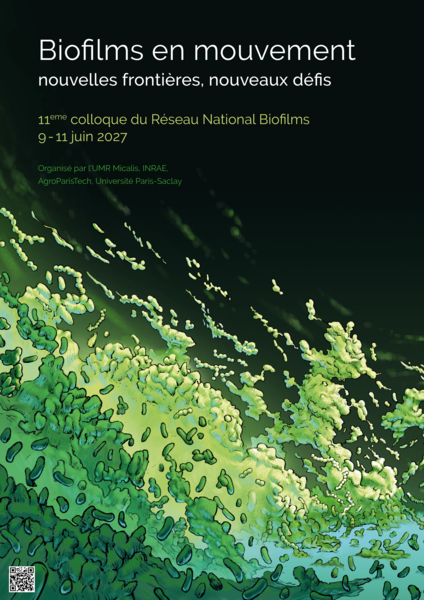
11e colloque du Réseau National Biofilms
Analysis of the effect of the delivery mode on a murine asthma model in CD-1 mice

We are looking for a Master 2 student (M/F) for a 6-month internship within the ProbiHôte team at the MICALIS Institute (INRAE UMR1319) located in Jouy-en-Josas. The intern will participate in a project funded by Carnot Qualiment to determine if delivery mode (c-section delivery versus vaginal delivery) impact asthma sensitivity on CD-1 mice. MICALIS institute […]
Sutterella identified as a pathobiont that blocks IL-22-mediated gut protection

In a study published in Gut Microbes, researchers from the ProbiHôte team have shown that bacteria of the genus Sutterella, which are commonly found in the human gut microbiota, can exacerbate intestinal inflammation by disrupting a key pathway that protects the intestinal mucosa. The study reveals that these bacteria inhibit activation of the […]
Caesarean birth: sex-specific effects on the microbiota

The effects of caesarean delivery on the newborn microbiota appear to vary according to sex. A research team in Micalis demonstrates this in a mouse model, showing increased susceptibility to colonic inflammation and a compromised gut barrier in males. These findings were published in Gut Microbes. Previous studies have already shown that caesarean delivery alters […]
Des microbiotes de l’environnement au microbiote intestinal

Des microbiotes de l’environnement au microbiote intestinal
Human Microbiome: From Models and Mechanism to Medicine

Human Microbiome: From Models and Mechanism to Medicine
Identification of Gut Biomarkers of FPIES (Food protein induced enterocolitis syndrome) in a Longitudinal Comparative Pediatric Study

Anais Lemoine, a paediatrician at APHP’s Trousseau hospital, did her PhD at Micalis, in the Probihôte team. This study is the result of collaboration with clinicians from the APHP at Trousseau and Pitié-Salpétrière hospitals and two INRAE laboratories at UPSaclay (Micalis and MTS/LIAA). Food protein-induced enterocolitis syndrome (FPIES) is a non-IgE-mediated allergy without known biomarkers. […]